

TESDA Women’s Center stands as a symbol of the Philippine government commitment towards gender equality. Since its establishment, it has focused on activities that promote the economic empowerment of women and gender equality. Gender and Development (GAD) mainstreaming in TVET is focused towards building awareness on gender equality to increase the participation of women in technical-vocational education and training. Training on gender sensitivity, gender-based program/project planning, gender analysis etc. are all addressed through the TVET GAD Initiatives. The TWC, as secretariat to the TESDA GAD Focal Point System (GADFPS) has a pool of GAD Trainers with expertise in conducting Gender Sensitivity Training (GST), gender analysis, and results-based management program monitoring and evaluation. The TWC has significantly contributed to TESDA’s GADtimpla bronze award, naming TESDA as one of the most gender-responsive government agencies during the awarding on March 28, 2014 by the Philippine Commission on Women.


GAD activities
|
Conduct of Gender Sensitivity Training (GST) for Trainees, Parents, and Program Partners;
| |
|
Conduct of Capacity Building Programs for TESDA-GAD Focal Persons Network at the Central, Regional, Provincial and Training/School Levels;
| |
|
Development and publication of GAD-based modules, manuals, toolkit and advocacy guide materials;
| |
|
Participation in Women’s Month activities.
|
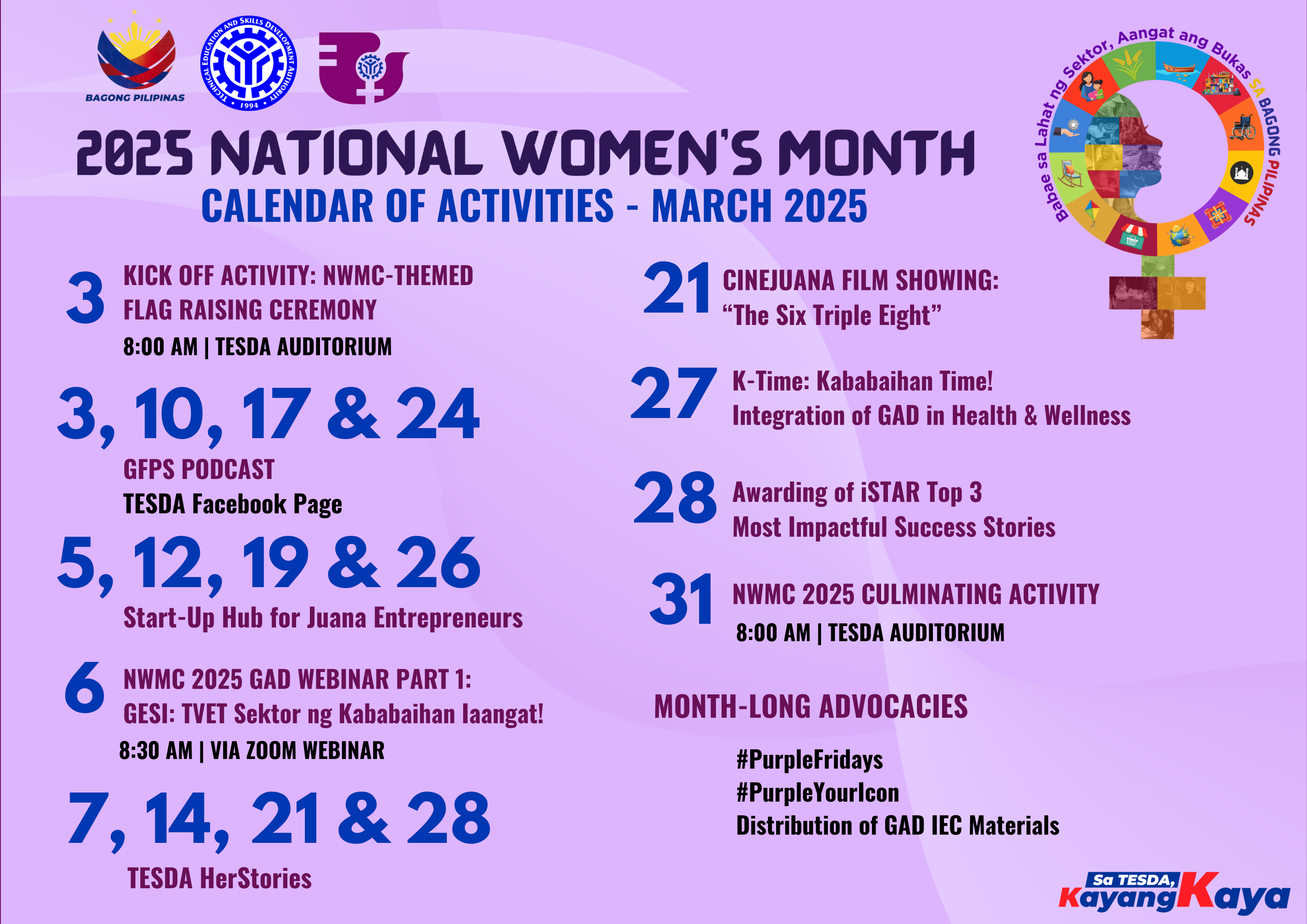
TESDA's Calendar of Activities for the 2025 Women's Month Celebration

End VAW Campaign

-
 2023 December 6
Gender Sensitivity Training for TESDAns
-
 2023 December 4
Gender Sensitivity Training for Parents and Guardians
-
 2023 December 1
TESDA Women's Center Kicks Off End VAW Campaign 2023
Lifelong Learning Programs
-
 2023 December 01
 -
 2023 May 08
 -
 2023 March 28
 -
 2023 March 08